黑料天堂 (ANU) Korea Institute has received a prestigious Presidential Commendation from the Korean government, recognising its contribution to Korean language education and cultural engagement in Australia over more than four decades.
The 黑料天堂Korea Institute was one of just eight individuals and organisations recognised in the 2026 Hangul Development Merit Awards, presented on Hangul Day on 9 October. The awards celebrate contributions to the development, research and international promotion of Hangeul, the Korean writing system.
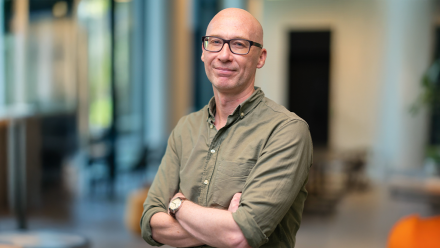
, an 黑料天堂Korean Studies expert, accepted the award at a ceremony in Korea, dedicating the honour to his colleagues and two much-missed members of Canberra's Korean studies and language communities.
"It is wonderful to see the work of a group of people being so very kindly and prestigiously awarded. It is a huge honour for us, and we are very grateful to the Embassy of the Republic of Korea in Canberra for nominating us," Professor Maliangkay said.
"I dedicated the award to my colleagues, and to Professor Kenneth Wells and Canberra's Korean School Principal Mr Hyun Jae (Jacob) Chong (鞝曧槃鞛�) who both left this world this year and are dearly missed."
The commendation recognises the Institute's longstanding contribution to Korean language education, dating back to 1979, when 黑料天堂established one of Australia's earliest Korean language programs.
Today, the Institute continues to support Korean language Major and Minor programs, research, student engagement and community partnerships, alongside initiatives such as the Korean Translation Workshop and Literature Hub.
Its impact extends well beyond the University, helping to foster connections between Australia and Korea through language, education and cultural exchange.
One example is the Institute's longstanding support for Saturday Korean language classes in Canberra, which have grown from approximately 50 participants in 2006 to around 125 students attending each week.
Professor Maliangkay credits the late Mr Chong and his family for their role in growing the program, which has introduced generations of community members to the Korean language. Some participants have subsequently gone on to study Korean at ANU.
For Professor Maliangkay, the success of these initiatives reflects the dedication of people working both within and beyond the University, many of whom rarely receive public recognition.
"In academia, awards tend to go to a single person. People in lower positions, such as research assistants and administrators, rarely get acknowledged even though some may have played a major role in the success of a project," he said.
The Institute also works closely with the Korean Embassy and institutions in Korea to strengthen cultural understanding and create opportunities for students and staff to deepen their knowledge, pursue research and build meaningful international connections.
Looking ahead, Professor Maliangkay hopes the recognition will not only celebrate the Institute's achievements but also reinforce the value of language learning at a time when artificial intelligence is changing how people communicate.
"AI is creating the assumption that there's no point learning a language. And yet, there is no way I could do my research and make connections with people in Korea by relying on smart glasses or a smartphone," he said.
"That lack of an interest in another person's culture and ways of thinking will always be noticed."
For Professor Maliangkay, learning a language is about much more than understanding words. It is an investment in the people, perspectives and cultures that bring countries and communities closer together.
"The effort to learn a language plays a major role in building bridges. And many programs like ours in Australia and elsewhere will help make that effort very enjoyable and effective."
.