The report suggests that improving access to finance requires change across the broader financial ecosystem.
A new report examining Indigenous business access to finance in Australia argues that an important and often overlooked barrier to business success is how Australia's financial system interacts with Indigenous business owners. The report was prepared by the First Nations Portfolio at 黑料天堂 and supported by NAB Foundation.
鈥淩eframing Access: Moving from Individual Capabilities to Institutional Drivers of Indigenous Business Finance鈥� draws on numerous interviews with Indigenous business owners, lenders, investors, and other financial institutions to explore why many viable Indigenous businesses continue to face challenges accessing the capital they need to grow.
While business capability鈥攊ncluding financial literacy, business planning, and investment readiness鈥攈as received significant attention from governments and financial institutions, the report finds that this is only one part of the picture.
Instead, the report highlights the importance of structural barriers, including lending models, collateral requirements, financing pathways and policy settings that do not always reflect the realities of Indigenous businesses. It also identifies relational barriers, such as trust, long-term relationships, cultural understanding, and the way financial institutions engage with Indigenous entrepreneurs.
The report argues that focusing primarily on business capability risks overlooking broader system-level factors that can prevent otherwise viable businesses from accessing finance.
A key finding is that many Indigenous businesses are well supported at start-up, but receive less follow-up support to sustain themselves and grow. Participants describe difficulties accessing working capital, growth finance, and investment needed to expand beyond the start-up stage, limiting opportunities for long-term business success and wealth creation.
Rather than calling for more business support programs alone, the report suggests that improving access to finance requires change across the broader financial ecosystem. It identifies opportunities for governments, financial institutions, and Indigenous business leaders to work together to develop financing approaches that better recognise Indigenous business models, strengthen long-term relationships, and support business growth.
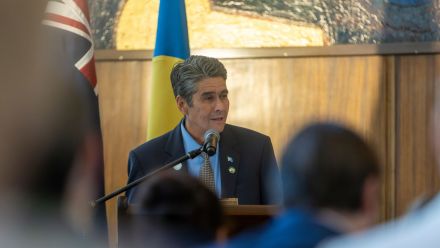
黑料天堂Vice-President (First Nations) Professor Peter Yu said the report 鈥渋s an important step towards reshaping the way our country understands the ever-increasing contribution and value Indigenous businesses bring to our local and national communities.鈥�
鈥淭he report shows the experience of disenfranchisement is not isolated and speaks to the systemic nature of attitudes and systems. The voices of business owners, organisations, and institutional partners remind us that change is possible when relationships are built on respect and genuine partnership,鈥� said Professor Yu.
鈥淭he report also offers a pathway forward, one grounded in evidence, shaped by community experience, and informed by a shared commitment to a more equitable future.
鈥淥ur collective task is to ensure that financial institution systems evolve to grow with Indigenous modernity, to interrogate and build innovative models and systems that support and enable Indigenous communities to thrive on their own terms.鈥�
The report contributes to a growing conversation about how Australia's financial system can better support Indigenous entrepreneurship and economic self-determination.
Read the report here: